
Lately, my feeds have been flooded with mentions of “OpenClaw”—it seems like everyone, everywhere, is talking about it.
Some people have even tested it out, only to complain that the “Tokens” involved ended up costing them a small fortune.
So, what exactly is a Token? And what does it have to do with me?
I can relate to that feeling; it reminds me of the turn of the millennium, when many people heard the word “Internet” for the very first time. It was a mix of excitement and confusion—it felt incredibly important, yet no one could quite articulate what it was actually for.
Hold on—let me explain it to you clearly using a scenario you’re absolutely familiar with.
01|Tokens Are Like “Game Tokens” at an Arcade
Chances are, we’ve all been to an arcade at some point.
Inside, you’ll find basketball shooting games, racing simulators, The King of Fighters, and all sorts of other arcade cabinets—each with a different price tag set by the owner. The racing games are popular, so they might cost 5 bucks each time. The claw machines are plentiful and operate on a high-volume, low-margin model, so they might cost 2 bucks. The basketball games attract a good crowd, too, priced at 3 bucks.
But here’s the problem: how do you handle payment? If every single machine required a coin slot and accepted only cash, just imagine how much loose change you’d have to keep on hand! It would be a hassle for both the owner and the players.
So, arcade owners came up with a solution:
Game Tokens.
First, they establish a minimum unit of value—say, 1 bucks equals one game token. Then, they price every single game as a multiple of that minimum unit: the basketball game costs 3 tokens, the racing game costs 5 tokens, and the claw machine costs 2 tokens.
See? Problem solved. As soon as you walk in, you simply head to the counter, exchange some cash for 50 or 100 tokens, and you’re free to play any game in the entire arcade. Better yet, if you don’t use them all up, you can simply pocket the remaining tokens and bring them back for your next visit.
Once you grasp the logic behind arcade game tokens, you’ll instantly understand what Tokens are in the AI world.
Tokens are essentially the “game tokens” of the AI realm—the smallest unit of measurement used to quantify exactly how much “intellectual effort” the AI expended to complete a task for you.
Whether you ask an AI to write a poem, analyze a financial report, or generate code, these tasks are just like playing games at an arcade: each requires a different payment and consumes a specific number of Tokens.
Alright, so now we know that Tokens are the “game tokens” of the AI world. But what exactly can you buy with them?
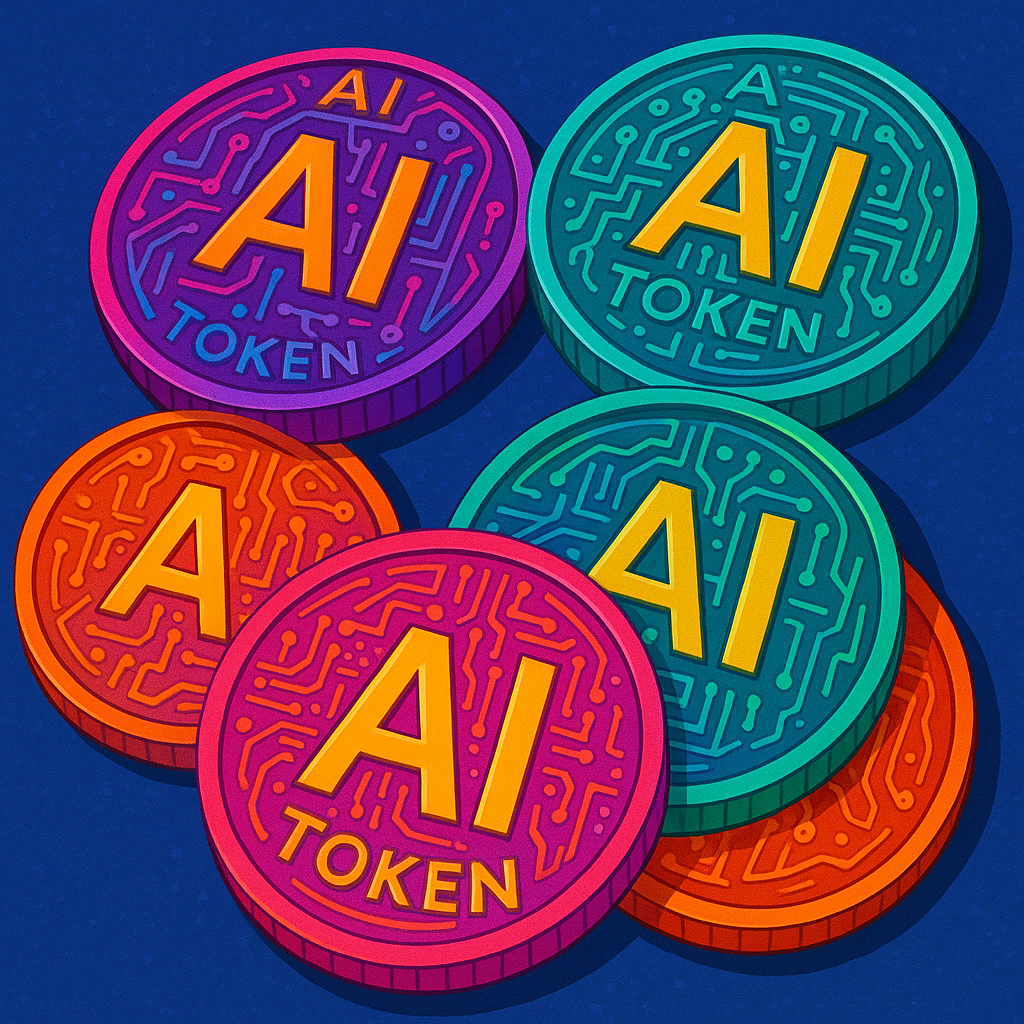
02|The Token: A Unit of Measurement for Pricing “Intelligence”
What you are buying is intelligence.
More specifically, a Token is a unit of measurement used to price AI “intelligence.”
What does this mean?
In the past—during the Industrial Age—any construction project first required establishing the three fundamental “utilities”: water, electricity, and gas. Later, with the advent of the Information Age, a fourth utility was added—internet connectivity—expanding the list to four. Now, in the AI Age, a fifth utility has emerged: access to intelligence.
This implies that these “five utilities” are becoming the foundational infrastructure for future business development.
Once the infrastructure is in place, one naturally turns to considering operational costs. Every fundamental resource possesses a clear, universally recognized unit of measurement.
Water is measured in “tons.” Electricity is measured in “kilowatt-hours.” Internet connectivity is measured in “gigabytes” (data usage). So, how should “intelligence” be measured? The answer is the Token.
Today, the “Token”—used to quantify “intelligence”—can be regarded as the standard system of weights and measures for the AI Age.
Therefore, in the future, when evaluating a company’s operations—beyond metrics such as electricity consumption, water usage, or server count—we might add one more question:
“How many Tokens does your company consume in a month?”
03|Final Thoughts
In the past, it took nearly a century for electricity to spread from factories into the homes of ordinary people. The rate of Token adoption, however, is evidently far faster; it requires no physical pipelines to be laid—merely an API interface. This shift in delivery method has allowed it to rapidly transform from an obscure technical term into a fundamental unit that permeates the very capillaries of our civilization.
Great inventors define units; great technologies define eras.
The Token—much like the Watt of the Industrial Age or the Ampere of the Electric Age—has acquired a significance that marks a turning point in history. Just as the names “Watt” and “Ampere” have been immortalized within our lightbulbs and electrical circuits, perhaps we can be bold enough to take a similar step:
To immortalize the name of the person who established the Token as the fundamental unit of the AI Age—by printing it directly onto our bills.
So, who do you think this person is?